Sticky by Design: How Blue-Chip Giants Profit From the Customers Who Can't Afford to Leave
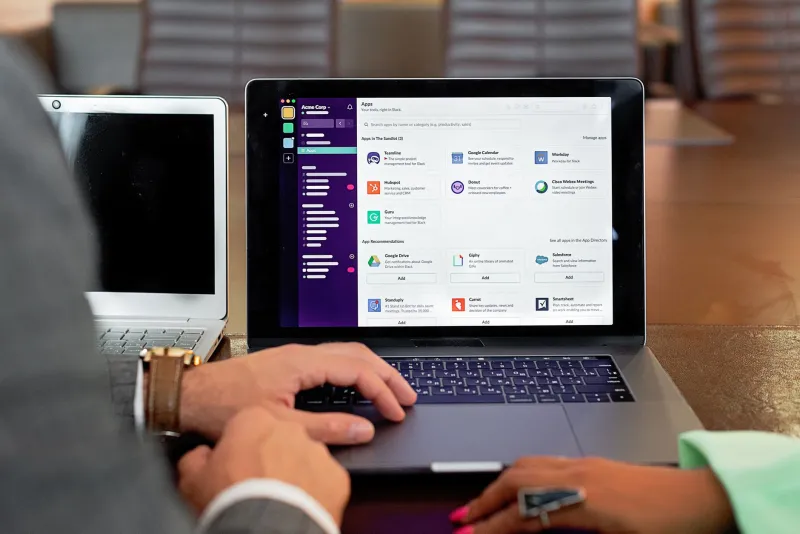
Most retail investors evaluate competitive position through metrics they can see: brand recognition scores, advertising budgets, market share percentages. These are legitimate signals, but they are also highly visible—which means the market has almost certainly already priced them in. The truly durable advantages often hide in plain sight, embedded not in the product itself but in the cost and complexity of walking away from it.
This is the economics of switching costs, and it represents one of the most powerful—and most underappreciated—moats in the blue-chip universe.
What Switching Costs Actually Mean
A switching cost is any friction, financial or otherwise, that makes a customer reluctant to move to a competing product or service. It is not merely inconvenience. At its most powerful, a switching cost transforms a purchasing decision into an existential calculation: How much would it cost us—in time, money, retraining, and operational disruption—to leave this vendor? When that answer runs into the millions of dollars, or threatens to derail core business operations, the vendor has effectively secured the customer relationship for years, sometimes decades.
For investors, this translates directly into pricing power, predictable revenue, and superior long-term returns. Companies with deeply embedded switching costs can raise prices with minimal customer attrition, sustain high margins even during competitive pressure, and generate the kind of recurring cash flows that compound shareholder wealth over full market cycles.
Microsoft: The Enterprise Ecosystem Lock-In
Few companies illustrate switching cost economics more clearly than Microsoft. The conventional narrative credits Microsoft's durability to Windows and Office—familiar, widely adopted products. But that explanation misses the deeper mechanism at work.
Large enterprises do not simply use Microsoft products; they build entire operational architectures around them. Active Directory manages organizational identities. Azure Active Directory extends those credentials into the cloud. Teams has become the communication layer through which work flows. Power BI sits atop data warehouses populated by Azure services. SharePoint stores institutional knowledge accumulated over years.
Displacing Microsoft from a mid-sized enterprise is not a technology decision—it is a multi-year organizational transformation project carrying enormous execution risk. IT departments understand this viscerally, which is why Microsoft's enterprise renewal rates have remained remarkably stable even as competitors have mounted well-funded challenges. The company's commercial cloud segment, which crossed $130 billion in annual revenue in fiscal year 2024, is underpinned not merely by product quality but by the sheer cost of departure.
For long-term investors, this dynamic matters enormously. Microsoft's ability to push annual price increases across its Microsoft 365 suite in 2023 and 2024—with minimal meaningful customer defection—is direct evidence of switching cost economics at work.
Visa: The Network Nobody Can Afford to Abandon
Visa operates one of the most elegant switching cost structures in American business. Its moat is not simply the size of its network—though scale matters—but the interlocking dependencies that network creates.
Consider the position of any major US bank. Its cardholders expect their Visa-branded card to be accepted virtually everywhere on earth. Its merchant clients depend on that same acceptance ubiquity to serve their customers seamlessly. Replacing Visa would require simultaneously convincing merchants, cardholders, and partner banks to migrate to an alternative—a coordination problem of staggering complexity. No single actor has the incentive to move first, because the value of the network lies precisely in everyone else being on it.
This creates a structural advantage that has allowed Visa to sustain net revenue margins that most industrial companies could not approach. Regulatory scrutiny remains a legitimate risk, and investors should monitor that dimension carefully. But the underlying switching cost architecture—the reason merchants pay to stay on the network even as they periodically negotiate rates—reflects a moat that has proven durable across multiple economic cycles.
Charles Schwab: The Asset Consolidation Trap (in the Best Sense)
Charles Schwab presents a somewhat different but equally instructive case. When a retail investor consolidates brokerage accounts, retirement assets, and banking relationships at Schwab, the friction associated with leaving grows with every passing year. Transaction histories, tax lot data, beneficiary designations, linked banking relationships, and automatic investment plans all accumulate into a web of administrative complexity.
The acquisition of TD Ameritrade deepened this dynamic considerably, bringing millions of active traders onto the Schwab platform and expanding the range of services—futures trading, thinkorswim's analytical tools, advisor custody services—that anchor client relationships. Schwab's management has been explicit that increasing the number of products held per client is a core strategic priority, precisely because multi-product households are dramatically less likely to transfer assets.
This is switching cost engineering through product breadth, and it explains why Schwab's client asset retention has remained high even during periods of fee pressure and competitive disruption from fintech challengers.
How to Identify Switching Cost Moats Before the Market Does
The analytical challenge is that switching costs rarely appear as a line item on a financial statement. Investors must infer their presence from observable proxies.
Customer retention and churn rates are the most direct signal. Companies with embedded switching costs tend to disclose high net revenue retention figures (common in enterprise software) or low voluntary attrition rates. When a company reports that existing customers expand their spending year over year, that is often switching cost economics expressing itself.
Pricing power without volume loss is another reliable indicator. If a company can raise prices consistently across multiple years without triggering meaningful customer losses, something beyond brand preference is at work. Review earnings transcripts for management commentary on price realization—executives at companies with genuine switching cost moats tend to discuss pricing with a confidence that peers in commodity-like industries cannot replicate.
Integration depth warrants direct investigation. How deeply does the company's product embed itself into customer workflows? Does it store proprietary data that would be painful to migrate? Does it connect to third-party systems in ways that create additional switching friction? These questions are best answered by reading customer case studies, independent analyst reports, and—where accessible—conversations with industry practitioners.
Revenue visibility and contract structure also matter. Long-term enterprise contracts, multi-year subscription arrangements, and deferred revenue balances all suggest customers who have made deliberate commitments that reflect switching cost awareness.
The Compounding Advantage
What makes switching cost moats particularly valuable from a long-term investment perspective is their self-reinforcing nature. As a customer embeds more deeply into a vendor's ecosystem—more data stored, more integrations built, more workflows dependent on the platform—the switching cost grows rather than diminishes. The moat widens with time, even in the absence of further product innovation.
This is fundamentally different from a brand moat, which can erode through reputational damage, or a cost advantage moat, which can be challenged by a well-capitalized competitor willing to operate at a loss. Switching costs, at their most developed, are structural rather than perceptual—and structure is extraordinarily difficult to replicate.
For investors focused on building durable wealth through blue-chip equity positions, identifying companies with genuine switching cost advantages—and distinguishing them from businesses that merely appear defensible—is among the highest-value analytical exercises available. The market eventually prices these moats correctly. The opportunity lies in recognizing them first.